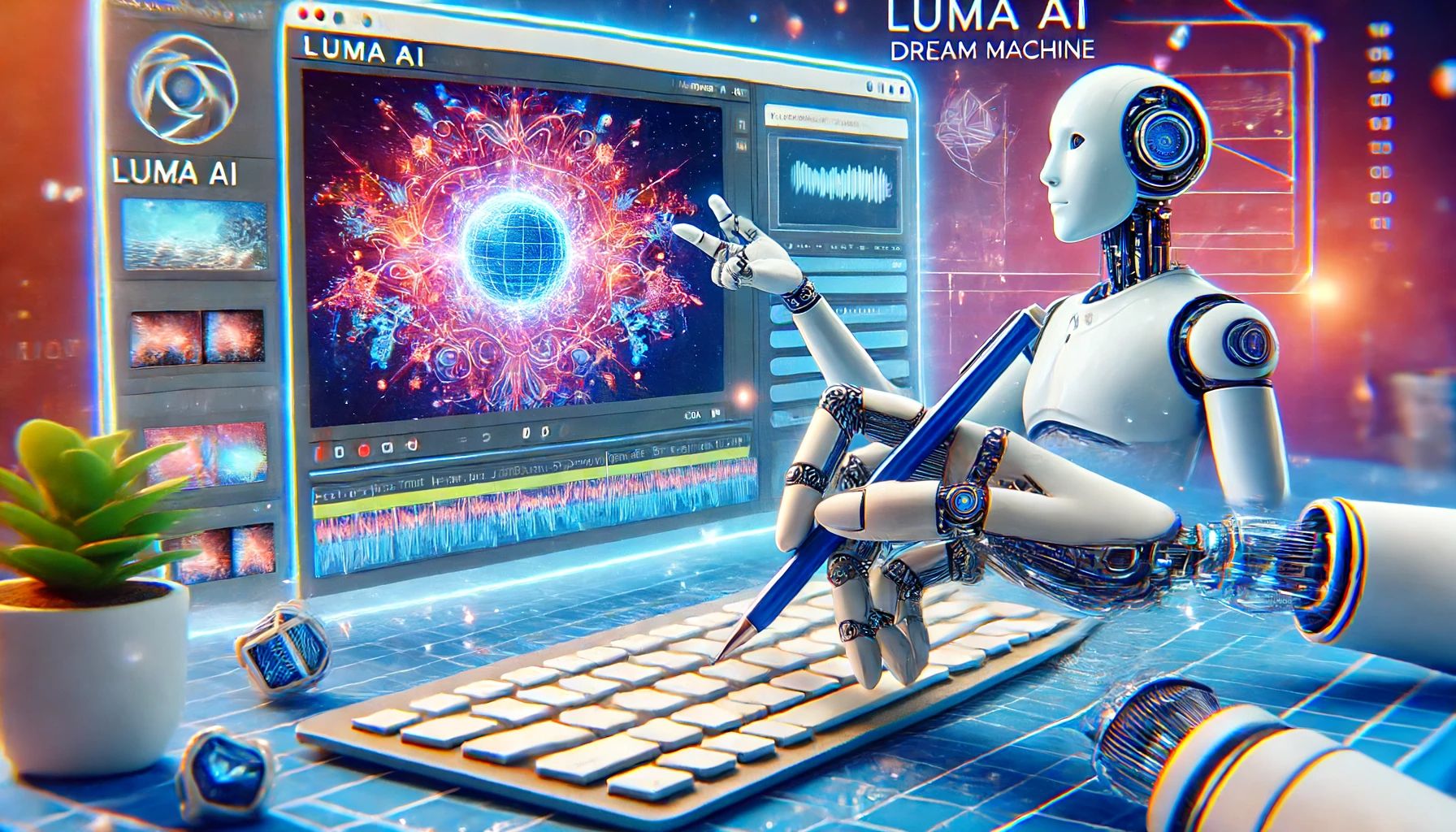
Video creation has entered an exciting new era where imagination can be transformed into moving visuals with fewer technical barriers. Traditional video production often requires cameras, lighting equipment, editing software, actors, locations, and significant amounts of time. Artificial intelligence is changing that process by giving creators new ways to develop visual ideas quickly. Among the tools attracting attention in this space, Luma dream machine offers an interesting approach to AI-assisted video creation. It allows creators to explore concepts, experiment with visual storytelling, and turn written ideas into dynamic video sequences.
Understanding the New Era of AI Video Creation
The growth of generative artificial intelligence has changed how people approach digital content. Instead of beginning every project with physical production, creators can now begin with an idea written in natural language. A detailed description can communicate a setting, subject, movement, atmosphere, and visual style, giving an AI system information about the desired result.
Luma dream machine fits into this changing creative environment by helping users explore video concepts through AI. Rather than replacing creative thinking, the technology can function as a creative assistant. Artists, marketers, filmmakers, educators, and social media creators can use generated visuals to test ideas before investing significant resources in traditional production.
This approach is particularly useful during the early stages of a project. A creator may have a story concept but struggle to visualize it. AI-generated video can provide a quick interpretation of that idea, making it easier to evaluate composition, movement, mood, and storytelling direction.
Turning Written Ideas Into Moving Visuals
One of the most interesting possibilities of AI video generation is text-based creation. A simple written prompt can describe an imagined scene, while a more detailed prompt can provide information about the environment, camera perspective, lighting, motion, and overall aesthetic.
For example, a creator might imagine a futuristic city surrounded by glowing architecture and moving vehicles. Instead of immediately creating a physical set or searching for stock footage, the creator can describe the concept and experiment with an AI-generated interpretation. This makes the creative process more exploratory.
Luma dream machine can be especially valuable for creators who think visually but do not have advanced filmmaking skills. The ability to begin with words lowers the technical barrier between an idea and an initial visual result. Creators can then refine their concepts by adjusting descriptions and exploring different directions.
Exploring Cinematic Storytelling
Video is more than a collection of images. Movement, timing, perspective, and atmosphere all contribute to storytelling. AI video tools provide creators with opportunities to experiment with these elements before committing to a final production.
A filmmaker developing a short story could use AI-generated scenes as visual references. A marketing team could explore different approaches for a campaign. An independent artist could experiment with surreal environments that would otherwise be difficult or expensive to produce.
The technology also encourages experimentation. Traditional production can make creators cautious about trying unusual ideas because every additional scene may require more money, equipment, and preparation. AI-assisted workflows can make experimentation more accessible, allowing creators to explore multiple concepts and identify the strongest visual direction.
Supporting Artists Without Replacing Creativity
A common misunderstanding about generative AI is that the technology eliminates the need for human creativity. In practice, the quality and usefulness of an AI-generated video depend heavily on the creator’s ability to communicate an idea and evaluate the result.
Artists still make important decisions about storytelling, composition, mood, pacing, character development, and audience. AI can help with visual exploration, but the creative purpose comes from the person using the tool.
Luma dream machine can therefore be viewed as part of a broader creative workflow rather than a complete replacement for artistic judgment. A creator might generate several possibilities, select the most compelling result, make adjustments, combine it with other footage, and finish the project using conventional editing techniques.
Creating Content More Efficiently
Time is one of the biggest challenges in modern content production. Businesses and individual creators are expected to produce videos regularly for websites, social media platforms, advertisements, presentations, and other digital channels. Developing every visual manually can become a demanding process.
AI-assisted generation can help accelerate the ideation and visualization stages. Instead of spending hours trying to determine whether a particular concept will work, creators can generate an early visual version and use it to guide future decisions.
This does not mean every generated clip will be perfect on the first attempt. Refinement remains an important part of the process. However, faster experimentation can reduce the time required to move from an abstract idea toward a workable creative direction.
Expanding Creative Possibilities
Perhaps the greatest benefit of AI video technology is the freedom to imagine beyond practical limitations. A creator can develop environments that would be difficult to build physically, experiment with unusual perspectives, or combine visual elements that are challenging to capture with a conventional camera.
For artists, this can open the door to new forms of visual expression. Concept artists can explore moving versions of their ideas. Designers can develop animated presentations. Musicians can experiment with visual concepts for songs. Writers can create visual references for fictional worlds.
Luma dream machine can become particularly valuable when the goal is exploration rather than simply producing a finished clip. Each generation can inspire another idea, creating a cycle in which technology supports continuous creative discovery.
The Importance of Effective Prompts
Getting useful results from an AI video generator requires more than entering a few random words. Clear prompts can provide stronger creative direction. Descriptions may include the subject, environment, action, camera movement, lighting, mood, and visual style.
For example, instead of describing a character simply as “a person walking,” a creator could describe a traveler walking through a misty mountain village at sunrise, with a slow cinematic camera movement and soft atmospheric lighting. More specific descriptions can help communicate the intended visual experience.
Prompt experimentation is also an important skill. Creators can change individual details and compare results, gradually learning which descriptions produce visuals closer to their original concept.
Applications Across Different Industries
AI video generation has potential applications across numerous fields. In advertising, businesses can explore campaign concepts and visual directions. In education, instructors can develop engaging visual material to explain complex subjects. In entertainment, creators can use generated clips for concept development and previsualization.
Real estate professionals could experiment with visual presentations, while designers could create animated demonstrations of their concepts. Social media creators can also use AI-generated visuals to develop distinctive content that stands apart from ordinary images and footage.
As the technology continues to develop, these applications may expand further. The most successful users will likely be those who combine AI capabilities with strong storytelling and subject knowledge.
Responsible and Thoughtful AI Video Creation
Creative freedom also comes with responsibility. Creators should consider copyright, consent, authenticity, and the potential impact of synthetic media. AI-generated content should be used thoughtfully, particularly when viewers could mistake generated scenes for real events or people.
Creators should also remember that AI systems can produce unexpected or inaccurate results. Reviewing generated material carefully is essential before publishing it. Human oversight remains important for maintaining quality, accuracy, and creative consistency.
The Future of Video Creativity
The future of video creation is likely to involve a combination of human imagination and increasingly capable AI tools. Traditional filmmaking is unlikely to disappear; instead, AI can become another instrument within the creator’s toolkit.
Luma dream machine represents the broader movement toward making video production more accessible, experimental, and flexible. Its significance is not simply that it can generate moving images, but that it gives people another way to think about visual storytelling. Someone with a strong idea but limited production resources can begin exploring that idea visually without needing an entire film crew.
As AI video technology continues to evolve, creators will have more opportunities to test concepts, develop visual narratives, and experiment with styles that were once difficult to achieve. The most exciting possibilities may come from people who use these tools not as shortcuts to creativity, but as partners in the creative process. By combining imagination, thoughtful prompting, artistic judgment, and careful editing, modern creators can discover new ways to turn ideas into engaging video experiences.